

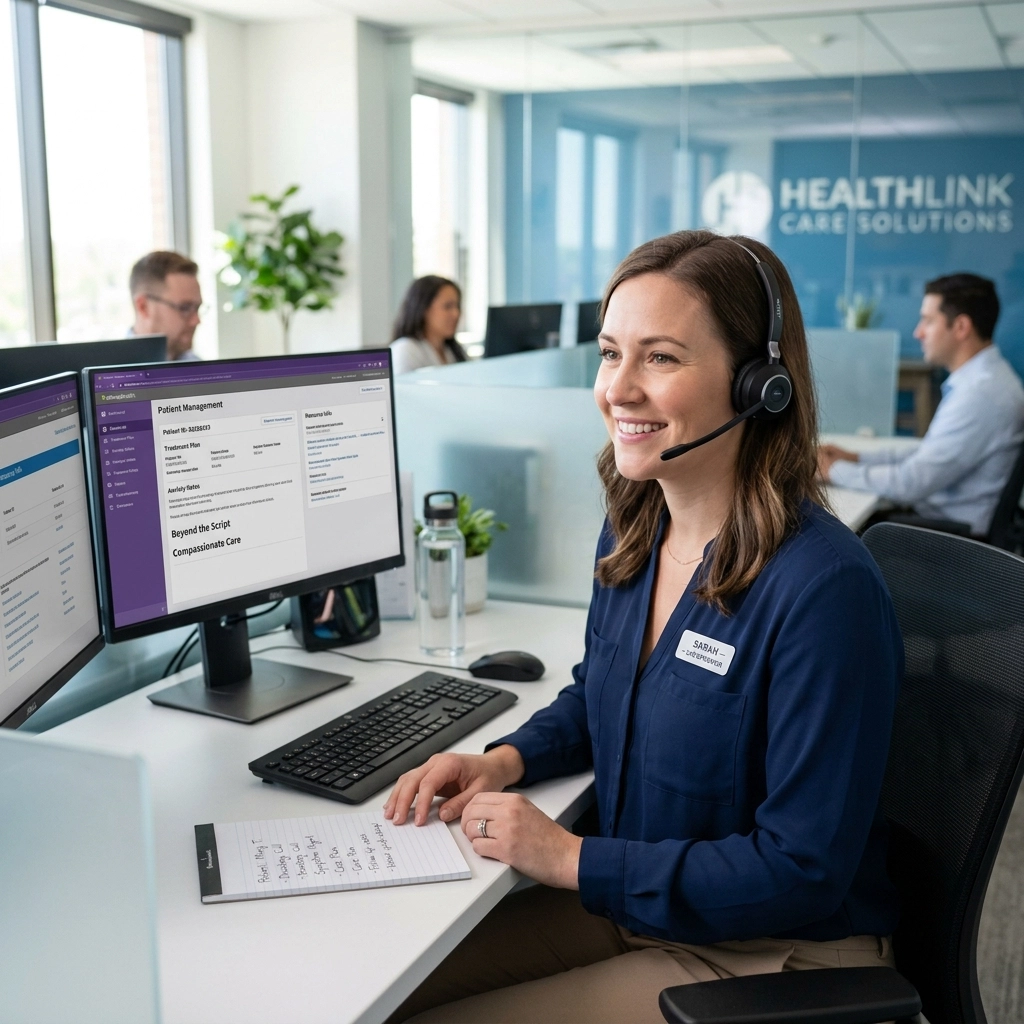
When a patient calls an oncology or specialty practice, they aren’t just looking for an appointment time; they are often seeking a lifeline during one of the most stressful periods of their lives. A high-anxiety call requires more than a standard greeting: it demands nuanced empathy and immediate action. To handle these sensitive interactions, live operators use specialized triage pathways and active listening techniques to identify urgent clinical needs while providing a calm, steady voice that de-escalates panic. Unlike robotic scripts or generic call centers, a dedicated healthcare answering service ensures that vulnerable patients are met with human compassion and precision routing 24/7/365. This specialized approach protects your practice’s reputation and, more importantly, ensures that critical symptoms are escalated to your on-call team without delay.
Table of Contents
- Key Takeaways
- Why is empathy critical for oncology and specialty patients?
- How does a live operator outperform a robotic script?
- What specific workflows ensure HIPAA compliance during high-anxiety calls?
- Can a general answering service handle the nuances of a specialty practice?
- Real-World Scenario: The Friday Afternoon Crisis
- Frequently Asked Questions
Key Takeaways
- Human Connection Matters: Oncology patients in distress benefit significantly from a live voice rather than a "voicemail black hole."
- Specialized Knowledge: A medical answering service for specialists uses evidence-based pathways to triage urgent symptoms like fever or sudden pain.
- Operational Excellence: MedConnectUSA provides 100% U.S.-based operators with sub-30-second hold times to minimize patient anxiety.
- Risk Mitigation: HIPAA-compliant workflows and BAA agreements are non-negotiable for specialty practices handling sensitive diagnostic data.
- 24/7/365 Coverage: High-anxiety calls don't just happen during business hours; your practice needs a reliable partner around the clock.
Why is empathy critical for oncology and specialty patients?
For a patient undergoing chemotherapy or awaiting a biopsy result, the phone is their primary connection to safety. When they call your office after hours, they are often at their most vulnerable. If they encounter a cold, rigid automated menu or an operator who sounds bored, their anxiety spikes. This isn't just about "customer service"; it's about clinical outcomes. High stress can lead patients to bypass your instructions and head straight to the Emergency Room for issues that could have been managed via your on-call physician.
At MedConnectUSA, we’ve focused on medical answering service best practices since 1991. We understand that an empathetic operator acts as a bridge. By acknowledging the patient's concern: using phrases like, "I understand this is a difficult time, let me get the doctor for you immediately": we provide the emotional regulation the patient needs to relay their symptoms accurately. This level of care is why a specialized physician answering services partner is crucial for improving patient retention in busy specialty practices.


How does a live operator outperform a robotic script?
Generic answering services often rely on a "one-size-fits-all" script. If the patient’s concern doesn't fit into a pre-defined box, the operator may struggle to route the call correctly. In specialty medicine, "not fitting the box" is the norm. An oncology patient calling about a low-grade fever needs a very different response than a dermatology patient calling about a prescription refill.
A live operator trained in specialty workflows can "read the room." They listen for the "unsaid" in a patient’s voice: the shaking breath, the long pauses, or the confusion. While an AI or an automated system might follow a logic tree, a live human can pivot.
When you look at AI vs. live operators, the human element wins in high-stakes scenarios every time. Our operators are trained to follow your specific protocols while maintaining the flexibility to prioritize a call based on the caller’s distress level. This ensures that your patients feel prioritized and respected, rather than like a number in a queue.
What specific workflows ensure HIPAA compliance during high-anxiety calls?
Empathy cannot come at the expense of security. In the heat of a high-anxiety call, a patient might start volunteering sensitive information: Social Security numbers, specific diagnoses, or family history: over an unencrypted line. A healthcare answering service must have rigid, "built-in" compliance to protect your practice from liability.
MedConnectUSA operators work within a secure environment where every interaction is documented and every message is delivered via encrypted channels. We handle the 12 steps to HIPAA Omnibus compliance internally, so you don't have to worry about data leaks during after-hours surges.
Our workflow includes:
- Secure Message Delivery: Using HIPAA-compliant apps or encrypted email.
- Strict Verification: Ensuring we are speaking to the patient or an authorized caregiver before releasing information.
- Complete Audit Trails: Every call is recorded and timestamped for your protection.
Understanding how HIPAA compliant answering services work is essential for any specialty practice manager who wants to sleep soundly at night.
Can a general answering service handle the nuances of a specialty practice?
The short answer is: rarely. General services handle everything from plumbers to pizza parlors. They lack the specialized training to understand the urgency of a post-operative complication or the nuances of oncology triage.
Comparison: Specialized vs. Generic Services
| Feature | Generic Answering Service | MedConnectUSA (Specialized) |
|---|---|---|
| Focus | Multi-industry (Retail, Trade, etc.) | 100% Medical-Only since 1991 |
| Operator Location | Often Offshore | 100% U.S.-Based |
| Training | Basic Customer Service | Medical Triage & HIPAA-Specific |
| Hold Times | Variable (often >1 min) | Average <30 Seconds |
| Compliance | Basic HIPAA (if any) | Full HIPAA/BAA Compliance |
| Customization | Rigid Scripts | Custom specialty-driven protocols |
Choosing a 100 percent medical answering service ensures that the person representing your practice understands the weight of the calls they are taking.


Real-World Scenario: The Friday Afternoon Crisis
Imagine it’s 5:15 PM on a Friday. Your office has just closed for the weekend. A patient who recently started a new immunotherapy regimen calls because they’ve developed a sudden rash and a 101-degree fever.
The Generic Service Outcome: The operator puts the patient on hold for three minutes. When they finally answer, they ask for a "customer ID number" and tell the patient they will pass a message to the office on Monday morning. The patient, feeling ignored and frightened, drives to the ER, resulting in an expensive, unnecessary admission and a frustrated physician.
The MedConnectUSA Outcome: Our operator answers in 20 seconds. Recognizing the urgency of a fever in an oncology patient, the operator follows your specific "Red Flag" protocol. While keeping the patient on the line and offering calm reassurance, they simultaneously page your on-call physician via our secure portal. Within five minutes, the doctor is on the phone with the patient, providing instructions and preventing a crisis. This is the definition of improving patient access in healthcare.
Frequently Asked Questions
Q: Are your operators medically trained?
A: While our operators are not nurses or doctors, they are highly trained in medical terminology and specific triage protocols. They know how to identify "red flag" symptoms that require immediate physician notification.
Q: How do you handle high call volumes during flu season or emergencies?
A: Because we are a national medical answering service, we have the scale to manage surges. Our staffing models are built around medical industry trends, ensuring hold times stay low even during peak seasons.
Q: Can you integrate with my EMR?
A: We offer various levels of integration and secure messaging to ensure that the information gathered after hours flows seamlessly back into your patient records.
Q: Do you offer services for other specialties like dental or pediatrics?
A: Absolutely. Whether you need specialized dental answering services or high-volume pediatric support, our protocols are customized to your specific field.
The difference between a patient feeling "handled" and feeling "cared for" lies in the voice at the other end of the line. For specialty practices, the "script" is only the beginning. It is the empathy, the rapid response, and the clinical awareness of the operator that truly protects your patients and your practice.
If you’re ready to move away from robotic responses and provide your patients with the high-touch, secure support they deserve, it’s time to see how a medical-only partner can transform your workflow.

To learn more about how we can support your oncology or specialty practice with 100% U.S.-based, HIPAA-compliant live answering, talk to a specialist.