


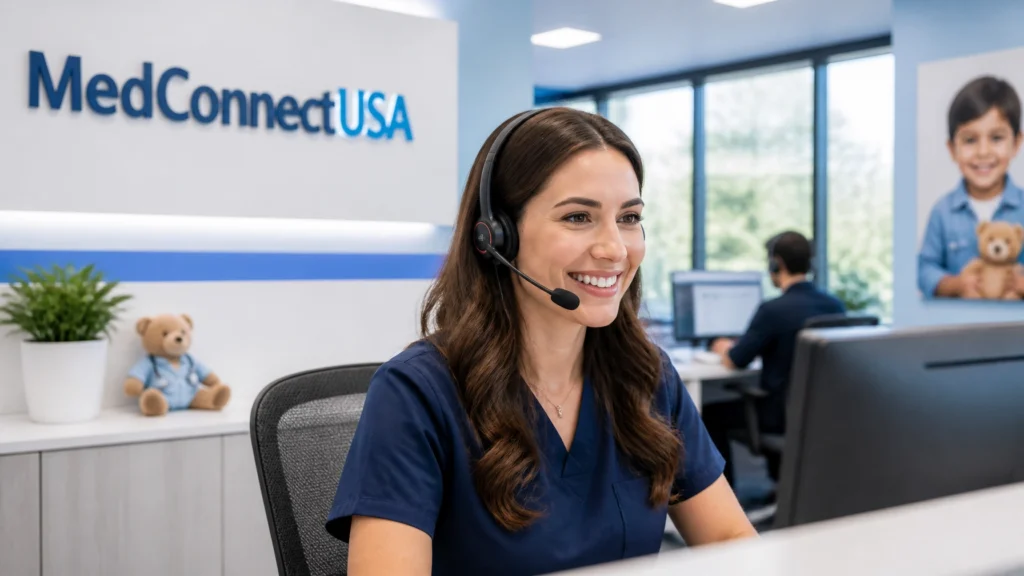
If your pediatric practice struggles with worried parent calls after hours, the solution is a structured, live-answer workflow that separates urgent concerns from routine messages and gets the right provider notified fast. A specialized pediatric answering service helps you manage high-anxiety calls with a calm, steady voice, practice-approved scripts, and secure message handling that protects both patient safety and parent trust. Instead of forcing families into voicemail, a trained medical answering service gives them a real person who can document symptoms clearly, follow your escalation rules, and support smoother after-hours communication.
For pediatric practices, that matters because anxious parents do not call with neat, predictable language. They call when a baby has a fever at midnight, when a child is vomiting after hours, or when they are unsure whether they should wait, monitor, or expect a callback soon.
Table of Contents
- Key Takeaways
- Why do pediatric practices need specialized after-hours call handling?
- How does a pediatric answering service reduce parent callback anxiety?
- What should pediatric after-hours scripts include?
- How do operators separate urgent pediatric calls from routine messages?
- How does seamless provider notification improve pediatric patient safety?
- How does a pediatric answering service compare with voicemail or a general answering provider?
- What does a real-world pediatric after-hours workflow look like?
- FAQ: Pediatric answering service for after-hours call handling
- How does operations and technology discipline improve pediatric after-hours call handling?
- How should you evaluate the right partner for your pediatric practice?
Key Takeaways
- A specialized pediatric answering service helps your practice manage worried parent calls with more consistency, empathy, and operational control.
- Parent callback anxiety drops when callers reach a live operator who uses practice-approved scripts and explains what happens next.
- A strong medical answering service should separate urgent pediatric concerns from routine messages using your exact call-handling rules.
- Seamless provider notification matters because urgent pediatric messages should move quickly, clearly, and securely to the right on-call clinician.
- MedConnectUSA supports pediatric practices with 24/7/365 coverage, <30s hold times, 100% U.S.-based operators, HIPAA-conscious workflows, and medical-only experience since 1991.
Why do pediatric practices need specialized after-hours call handling?
Pediatric after-hours calls are different from routine administrative traffic. Parents often call when they are tired, scared, and trying to explain symptoms for a child who cannot fully describe what is wrong. That makes your phone workflow part communication process, part anxiety management, and part clinical support pathway.
A parent may say, "My toddler feels hot and won't settle," "My baby threw up again," or "My child is coughing and I don't know if this can wait until morning." Those calls need more than polite message-taking. They require a workflow that helps your practice collect the right details, identify urgency based on your approved criteria, and move information to the correct provider without confusion.
That is why many practices rely on a specialized pediatric answering service and medical answering service instead of voicemail or a generic call handler. The goal is not just coverage. It is safer, steadier after-hours communication that supports families and protects your staff from chaos the next morning.
How does a pediatric answering service reduce parent callback anxiety?
When parents call after hours, they are often listening for two things immediately: whether a real person answers and whether that person sounds calm. A trained operator cannot diagnose or improvise, but they can reduce stress by using a professional, steady voice, asking structured questions from your approved script, and clearly explaining the next step in the process.
That matters because anxiety tends to rise when parents feel unheard, uncertain, or trapped in voicemail. A live operator from a specialized pediatric answering service can say what your workflow allows, confirm the callback number, document the concern accurately, and reassure the parent that the message is being handled according to the practice's protocol. That kind of consistency helps parents feel that their child has not been lost in the system.
At MedConnectUSA, operators follow your practice-approved instructions closely. They do not guess, freelance, or overpromise. They identify the caller, gather the needed details, categorize the call correctly, and route the message through a secure workflow. That measured approach helps you reduce parent callback anxiety while keeping after-hours communication disciplined.


What should pediatric after-hours scripts include?
A good pediatric after-hours script helps your operators stay calm, consistent, and accurate under pressure. It also helps your practice standardize what gets captured before a provider is notified.
Your script may include:
- Caller name and relationship to the patient
- Patient name and age
- Best callback number
- Primary concern in the caller's own words
- Timing of symptoms
- Whether the child is sleeping, awake, crying, hard to wake, or difficult to console if your protocol requires that level of detail
- Relevant recent context such as medication changes, recent visit instructions, or post-procedure concerns
- Whether the concern falls into your urgent or routine category
The right script does not turn the call into an interrogation. It gives operators a clear framework so they can gather meaningful details without sounding robotic. That is especially important in pediatric care, where a parent's emotional state can affect how clearly the situation is described. A specialized medical answering service helps turn that stress into cleaner communication for your on-call team.
How do operators separate urgent pediatric calls from routine messages?
Urgent versus routine categorization is one of the most important parts of pediatric after-hours call handling. Your practice defines what counts as urgent. The operator's job is to follow that framework exactly.
For example, a routine message may involve a non-urgent appointment request, a school form question, or a medication refill inquiry that your protocol says can wait until business hours. An urgent message may involve symptoms, a post-visit concern, or another issue your practice requires to be sent promptly to the on-call provider.
The benefit of a specialized pediatric answering service is consistency. Instead of each caller landing in voicemail and hoping they explained things well enough, your operators use your rules to classify the concern and move it down the right path. That reduces message pileups, limits next-day cleanup, and helps your providers focus first on the calls that truly need timely attention.
How does seamless provider notification improve pediatric patient safety?
Even the best intake script is not enough if the message stalls after collection. Pediatric after-hours workflows depend on clean handoffs. Once an operator documents the call, the message should move quickly and securely to the correct on-call provider, nurse, or escalation contact based on your instructions.
Seamless provider notification improves patient safety because it reduces avoidable friction:
- fewer missing callback numbers
- fewer vague symptom summaries
- fewer delays caused by poorly routed messages
- fewer repeat calls from increasingly anxious parents
- fewer misunderstandings between the front end of the call and the clinical response
At MedConnectUSA, our secure messaging workflow supports that process by helping move messages through protected channels instead of informal, unsecured workarounds. For pediatric practices, that creates a more dependable after-hours communication chain and a better family experience.

How does a pediatric answering service compare with voicemail or a general answering provider?
If you are evaluating options, the comparison usually comes down to control, clarity, and parent experience.
| Option | How worried parent calls are handled | Message quality | Parent experience | Fit for pediatric after-hours workflows |
|---|---|---|---|---|
| Standard voicemail | Parent leaves a message and waits | Often incomplete or rushed | Stressful and uncertain | Weak |
| General answering provider | Basic intake, less pediatric-specific scripting | Varies | Better than voicemail but may miss nuance | Moderate |
| Specialized pediatric answering service | Practice-approved script, urgent vs. routine categorization, secure dispatch | More structured and workflow-aware | Reassuring, clear, and more consistent | Strong |
A specialized healthcare answering services partner helps reduce the "telephone game" that happens when emotional calls are poorly captured. In pediatrics, details matter. "Warm and fussy" is different from "difficult to wake." "Crying after bedtime" is different from "parent is concerned symptoms are getting worse quickly." Your providers need clean, accurate communication the first time.
A dedicated medical answering service also supports daytime overflow, which is useful when your phones are busy during lunch breaks, staff meetings, immunization season spikes, and routine scheduling surges.
How does operations and technology discipline improve pediatric after-hours call handling?
For a Friday ops/tech decision, the real question is whether your after-hours process is reliable when your in-house team is off the clock. That comes down to disciplined workflows, secure message delivery, and consistent escalation logic. Your pediatric practice should know exactly how a call moves from live answer to documentation to provider notification.
At MedConnectUSA, that means operators work from your approved scripts, urgent-versus-routine categories, and on-call instructions rather than making case-by-case judgment calls. Messages move through secure messaging instead of informal channels, which helps reduce delays, transcription mistakes, and avoidable handoff problems. For practices evaluating healthcare answering services, that operational structure matters because it protects both response quality and parent confidence.
This is also where a specialized medical answering service outperforms a basic answering setup. You need repeatable intake, accurate message capture, accountability, and business continuity when your staff is unavailable, your call volume spikes, or your office systems are under pressure. A tighter ops/tech workflow creates a steadier experience for families and a cleaner process for your clinicians.
What does a real-world pediatric after-hours workflow look like?
Consider a common scenario. Your pediatric office closes at 5 PM. At 9:12 PM, a parent calls because their child is vomiting, crying, and they are not sure whether this can wait until morning. Instead of reaching voicemail, they reach a live operator through your pediatric answering service.
The operator:
- Confirms the caller identity and callback number.
- Documents the child's age and the concern using your approved script.
- Determines whether the message meets your urgent after-hours category based on your protocol.
- Sends the message securely to the correct on-call provider or escalation contact.
- Records the interaction for accountability and follow-up.
That workflow does not replace your clinical judgment. It supports it. The provider receives a cleaner message, the parent knows what happens next, and your office avoids the next-morning scramble of sorting through emotional, incomplete voicemails.
Case Study: How structured after-hours scripting reduces friction
A pediatric practice using a generalized overflow process often sees the same pattern: multiple overnight voicemails, incomplete symptom descriptions, missing callback numbers, and parents calling back again because they are unsure whether anyone heard them. After switching to a specialized medical answering service workflow with urgent versus routine categorization, practice-approved pediatric scripts, and secure provider notification, the practice can reduce repeat calls, improve message clarity, and create a calmer experience for both parents and on-call clinicians.
FAQ: Pediatric answering service for after-hours call handling
Can a pediatric answering service handle both after-hours and daytime overflow?
Yes. Many pediatric practices use a medical answering service for nights, weekends, holidays, lunch coverage, staff meetings, and high-volume daytime periods.
Will operators follow our exact pediatric call-handling protocol?
Yes. MedConnectUSA works from your practice-approved instructions, including how to classify urgent versus routine calls and who should receive each type of message.
Can a healthcare answering services partner help with anxious parent callers?
Yes. A trained operator can reduce stress by answering live, using a calm and steady voice, gathering details through a structured script, and explaining the next step without improvising outside your protocol.
Is this better than voicemail for pediatric practices?
In most cases, yes. Voicemail often leads to incomplete symptom details, delayed responses, and more parent uncertainty. A live pediatric answering service creates a more controlled after-hours workflow.
Does MedConnectUSA support HIPAA-conscious workflows?
Yes. MedConnectUSA supports healthcare clients with secure processes, medical-only experience since 1991, 100% U.S.-based operators, and BAA support where appropriate.
How should you evaluate the right partner for your pediatric practice?
Choosing an after-hours partner for pediatrics is not just about answering calls. It is about protecting parent trust, reducing operational friction, and making sure urgent concerns are captured and routed the right way every time. Look for a provider that offers 24/7/365 live coverage, customized scripts, urgent versus routine categorization, secure workflows, and experience with medical communication.
MedConnectUSA provides a medical answering service, healthcare answering services, and after-hours medical answering service support built for practices that need more than a generic message pad. With <30s hold times, 100% U.S.-based operators, medical-only operations since 1991, and secure communication options, we help you create a steadier experience for worried parents and a cleaner after-hours workflow for your providers.
If your team is trying to reduce parent callback anxiety without overloading staff, a specialized pediatric answering service gives you a more reliable way to manage after-hours communication while keeping your process consistent.