

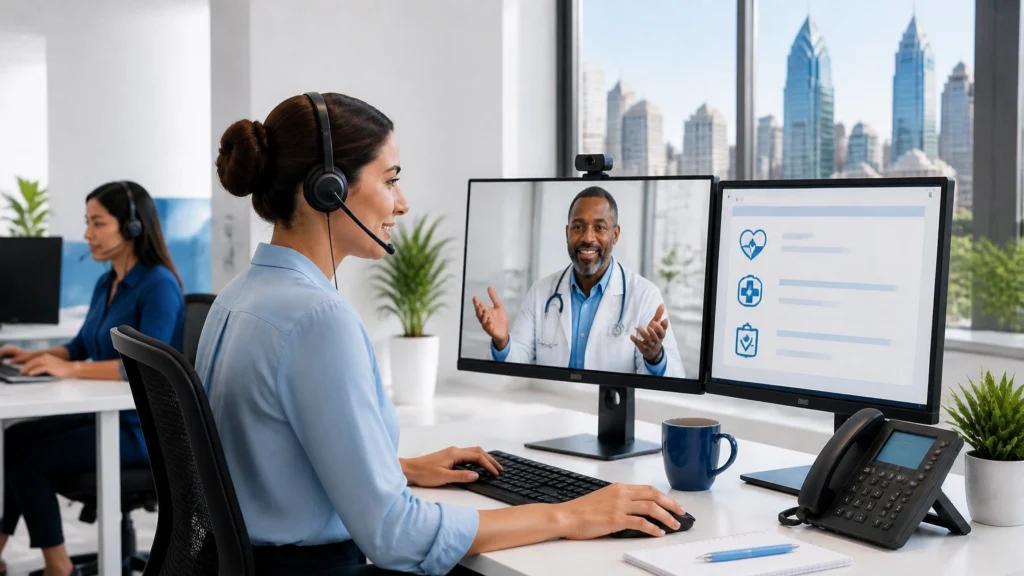
If your practice offers virtual visits, a medical answering service Philadelphia strategy can help you keep telehealth organized before, during, and between appointments. The right telehealth answering service does more than answer calls. It confirms virtual appointments, guides patients who cannot access the visit link, follows your escalation rules for urgent symptoms, and keeps providers informed through secure message delivery. For Philadelphia-area practices competing for patient loyalty in a busy regional healthcare market, that support can reduce missed visits, protect staff time, and create a smoother patient experience—especially during high-intent Monday call surges when patients are rescheduling, following up, and trying to reconnect after the weekend.
A workflow-driven virtual care support model also helps you stay responsive after hours, during lunch breaks, and during sudden call spikes without pushing patients into voicemail loops.
Table of Contents
- Key Takeaways
- Why does telehealth need live operator support in Philadelphia?
- How does a medical answering service Philadelphia workflow help coordinate virtual visits?
- How does a telehealth answering service handle patient tech-support triage?
- How does virtual care support improve communication between visits?
- What does telehealth coverage look like after hours, on weekends, or during surges?
- How does live telehealth support compare with voicemail, call centers, or automated systems?
- What real-world telehealth scenarios does a medical answering service Philadelphia team handle?
- FAQ
Key Takeaways
- A medical answering service Philadelphia workflow helps your practice coordinate virtual visits, manage missed connections, and reduce telehealth no-shows.
- A specialized telehealth answering service can triage common patient access problems such as broken links, audio issues, device confusion, and portal login questions based on your instructions.
- Live operators help protect continuity between visits by relaying refill requests, symptom updates, appointment changes, and provider messages through secure channels.
- MedConnectUSA supports healthcare organizations with a medical answering service, 100% U.S.-based operators, HIPAA-conscious workflows, BAA availability, and medical-only experience since 1991, without promoting specific pricing.
- Workflow-specific live coverage can ease front-desk pressure during call surges, lunch breaks, provider delays, and after-hours telehealth demand.
Why does telehealth need live operator support in Philadelphia?
Telehealth gives your patients convenience, but it also creates new points of failure. In a market as active as Philadelphia, where patients may compare multiple provider groups, urgent care networks, hospital systems, and specialty practices, even a small communication gap can lead to a missed visit or a lost patient.
A patient may call because:
- the video link never arrived,
- the provider is running late,
- they do not know whether to use a phone or laptop,
- they are locked out of the portal,
- they are unsure if symptoms belong in a virtual visit, an office visit, or urgent escalation.
That is where a live medical answering service becomes operationally important. Instead of forcing callers through a maze of prompts, your patients reach a trained operator who follows your telehealth workflow. That means fewer abandoned calls, fewer frustrated messages waiting for your staff the next morning, and a more reliable virtual care experience going forward.
How does a medical answering service Philadelphia workflow help coordinate virtual visits?
A strong medical answering service Philadelphia process supports the full appointment lifecycle, not just the initial call. When your operators work from your instructions, they help create order around the moving parts that often disrupt virtual care.
Common coordination tasks include:
- confirming telehealth appointments and documenting callback numbers,
- verifying which provider or department the patient is trying to reach,
- relaying secure messages when a clinician is delayed,
- helping route patients to the correct portal, link, or scheduling contact,
- capturing symptom-based details before escalating to the on-call provider,
- supporting reschedules and cancellations according to your rules.
For many practices, the challenge is not whether telehealth works in theory. It is whether the workflow holds together when patients call five minutes before a visit and say, "I can't get in." A live healthcare answering service gives you a calm first point of contact when that pressure hits.
| Telehealth Workflow Step | Common Breakdown | How a Medical Answering Service Helps |
|---|---|---|
| Appointment confirmation | Patient misses link or misunderstands instructions | Operator verifies visit type, callback number, and next step |
| Pre-visit problem call | Caller reaches voicemail | Live operator answers and documents issue in real time |
| Provider running behind | Patient assumes visit was forgotten | Operator reassures patient and relays updated timing |
| Wrong department contact | Patient gets bounced between lines | Operator identifies destination and routes accurately |
| Missed virtual connection | Staff has to sort out delayed messages later | Operator records details and escalates per protocol |

How does a telehealth answering service handle patient tech-support triage?
Your operators should not replace your IT team, but they can reduce friction fast by handling first-line telehealth call triage. This is one of the most practical advantages of a telehealth answering service.
When a patient says, "The camera isn't working," or "I never got the video link," the operator can follow your approved script and decision tree. That may include:
- confirming patient identity using your process,
- determining whether the issue is login-related, device-related, or scheduling-related,
- checking whether the patient has the right appointment time and provider,
- directing the patient to the correct platform entry point,
- escalating urgent clinical concerns immediately instead of treating them as a tech problem,
- notifying your team when the visit needs to convert from video to phone, if allowed.
This matters because many telehealth failures are not true technology failures. They are communication failures. A specialized HIPAA compliant answering service helps your practice separate routine access problems from urgent care concerns without losing control of privacy-sensitive information.
For example, if an older patient in the Philadelphia area calls 10 minutes before a virtual follow-up and says the "button disappeared," a trained operator can calmly gather the right details, identify whether the patient is using the wrong link, and notify the office or on-call workflow based on your instructions. That prevents panic now and smoother visits later.
How does virtual care support improve communication between visits?
Telehealth is not limited to the moment a video screen turns on. Your patients often need guidance between visits, and your providers need accurate, timely message flow. That is where virtual care support becomes essential.
Between visits, a medical answering service can help your practice manage:
- symptom updates that need provider review,
- refill or pharmacy-related message intake,
- lab or follow-up call routing,
- scheduling changes for virtual or in-person care,
- referral questions,
- post-visit concerns that must be documented and escalated.
This kind of continuity matters in high-volume settings such as primary care, behavioral health, pediatrics, and chronic disease management. If patients cannot reach a live person, they may delay care, repeat calls, or go elsewhere. A responsive after-hours medical answering service helps preserve trust when your office is closed but patient needs continue.
MedConnectUSA supports this workflow with operator-driven message capture, secure delivery options, and customized call handling. With medical-only experience since 1991, 100% U.S.-based operators, HIPAA-conscious processes, BAA availability, and reported hold times under 30 seconds, we help you create a more dependable communication bridge between one visit and the next.
What does telehealth coverage look like after hours, on weekends, or during surges?
Telehealth demand does not stop when your front desk leaves for the day. Patients still call at night, on weekends, during storms, and during periods of unusually high daytime volume. If your current process sends those callers to voicemail, you are leaving virtual care continuity to chance.
A telehealth answering service helps your practice stay responsive when:
- an evening virtual urgent visit needs provider contact,
- a parent cannot connect to a pediatric telehealth appointment after dinner,
- a behavioral health patient calls during a weekend concern,
- a specialist runs behind and multiple patients call at once,
- your office phones spike during a flu surge or weather disruption.
This is where a dedicated answering service for doctors office workflow becomes more than convenience. It becomes continuity planning. Because MedConnectUSA is a medical-only answering service with U.S.-based operators working in secure call center environments, your patients still reach a live person when your own team is stretched thin. That helps your next business day start cleaner and more organized.

How does live telehealth support compare with voicemail, call centers, or automated systems?
Not every answering option supports virtual care equally. If your goal is reliable virtual care support, it helps to compare models directly.
| Option | Strengths | Limitations for Telehealth | Best Fit |
|---|---|---|---|
| Voicemail only | Low effort to set up | Delayed response, patient frustration, missed urgent details | Very limited after-hours use |
| Generic call center | Broad availability | May lack medical workflow depth, escalation nuance, and HIPAA-focused processes | Non-clinical overflow |
| Automated phone tree | Handles basic routing | Poor empathy, weak triage, high abandonment during urgent or confusing calls | Simple administrative sorting |
| Specialized medical answering service | Live operators, protocol-based escalation, telehealth coordination, secure message flow | Requires clear onboarding and workflows | Practices that need dependable telehealth support |
For Philadelphia-area practices, a medical answering service Philadelphia solution is often the better fit when you need live communication, not just call containment. The difference is especially noticeable when the caller is anxious, behind on technology, or unsure whether their concern is urgent.
You can also pair a live medical answering service with your existing in-house team for daytime overflow, lunch coverage, and high-demand telehealth windows. That gives you more control without forcing your staff to absorb every spike alone.
What real-world telehealth scenarios does a medical answering service Philadelphia team handle?
Here are a few realistic examples of how a medical answering service Philadelphia workflow supports telehealth operations:
Scenario 1: Behavioral health follow-up with login trouble
A patient scheduled for a 7:00 PM virtual therapy follow-up cannot access the platform and starts to feel overwhelmed. Instead of hitting voicemail, the patient reaches a live operator. The operator verifies the callback number, confirms the scheduled provider, follows the practice's telehealth troubleshooting steps, and alerts the appropriate contact if escalation is needed. The patient feels supported, and the visit has a better chance of staying on track.
Scenario 2: Pediatric telehealth after dinner
A parent calls because their child has a fever and they are unsure whether to wait for a morning appointment, request a virtual visit, or contact the on-call provider. The operator follows the pediatric protocol, gathers the right details, and routes the call according to urgency. That reduces guesswork for the family and protects your overnight workflow.
Scenario 3: Specialist delay during a packed clinic day
A provider is running 25 minutes behind on a string of virtual follow-ups. Patients start calling the office asking whether the telehealth appointment is still happening. Instead of tying up clinical staff, the operator explains the delay using your approved language, confirms callback details, and relays any urgent concerns. The schedule stays more stable, and your team can keep moving.
Scenario 4: Between-visit symptom question
A chronic care patient calls two days after a virtual check-in with a medication concern. The operator documents the message clearly and routes it securely based on your instructions. The patient does not feel ignored, and your provider receives a clean, actionable communication.
FAQ
Can a telehealth answering service help if a patient cannot join a virtual visit?
Yes. A telehealth answering service can follow your approved steps to identify whether the problem involves scheduling, login access, link delivery, device confusion, or a need for provider escalation.
Is a medical answering service Philadelphia solution only useful after hours?
No. Many practices use a medical answering service Philadelphia workflow for daytime overflow, lunch coverage, provider delays, high call volume, and telehealth coordination throughout the day.
Can operators support both telehealth and in-person scheduling workflows?
Yes, if your call handling instructions allow it. A specialized medical answering service can support mixed workflows so patients are guided to the right next step.
What if a patient says the tech problem is actually a medical problem?
That is exactly why live operator triage matters. Your operators can follow your protocol to distinguish routine access issues from urgent symptoms that need immediate escalation.
Does virtual care support replace my office staff?
No. Virtual care support works best as an extension of your team. It helps reduce interruptions, improve response coverage, and keep communication organized when your staff is busy or off duty.
Why does medical-only experience matter for telehealth answering?
Telehealth calls often involve symptoms, urgency questions, privacy expectations, scheduling coordination, and provider escalation. A medical-only healthcare answering service is better aligned with those workflows than a generic answering provider.
Telehealth works best when patients can reach a calm, informed person who knows what happens next. If your practice wants fewer missed virtual connections, clearer patient communication, and a more dependable workflow between visits, a specialized medical answering service can help you support that experience without overloading your staff.
For a Philadelphia-focused telehealth workflow that still delivers nationwide medical-only expertise, talk to a specialist.